


Driving Circularity: Vehicle Recycling Legislation Must Go Further
by George Kiernan
Pakire Polymers News
Earlier this month, the European Commission imposed €458 million in fines on 15 car manufacturers and the European Automobile Manufacturers’ Association (ACEA) for operating a cartel that stifled end-of-life vehicle (ELV) recycling for over a decade. In a coordinated case, the UK’s Competition and Markets Authority added its own penalties: £77.7 million for similar practices on British soil.
These weren’t isolated lapses or technical oversights. The manufacturers had deliberately agreed not to pay vehicle dismantlers, suppressed information about recyclability, and colluded to avoid competing on the sustainability of their products. The consequences were far-reaching: consumers were denied the ability to make informed choices, and recyclers were cut out of a process in which they should have played a central role.
The scale of the fines reflects the seriousness of the offences. But more significantly, these decisions arrive just as the European Union is preparing its most comprehensive overhaul of vehicle recycling legislation in two decades — the End-of-Life Vehicles Regulation (ELVR), expected to be finalised in 2026. For policymakers, recyclers, and manufacturers alike, this is a moment that demands more than procedural updates. It requires a fundamental rethinking of how the automotive sector approaches materials, responsibility, and value.
Lessons from a Rigged System
At the core of the cartel was a shared commitment to what the manufacturers called “Zero-Treatment-Cost.” The aim was simple: eliminate payments to dismantlers by tacit agreement, effectively offloading the financial burden of ELV recycling. At the same time, the manufacturers agreed not to advertise the proportion of recycled materials in their vehicles, or the extent to which their designs allowed for easy disassembly and reuse.
These choices weren’t neutral. They actively undermined the intent of the ELV Directive 2000/53/EC, which was supposed to guarantee free vehicle take-back and ensure the cost of recycling was not borne by the public. By suppressing both financial and informational flows, the cartel made it difficult for more responsible actors to gain ground and created a system in which circularity became a marketing aspiration rather than a measurable outcome.
Targets That Mean Something
The European Commission has proposed a 25% recycled content target for plastics in new vehicles, based strictly on post-consumer waste. This is a step in the right direction — but it will need defending. Some industry voices have called for pre-consumer offcuts and biobased plastics to be included in the count, which risks diluting the target to the point of ineffectiveness.
Equally, there is still no firm commitment to mandatory recycled content for steel, the most significant material in car manufacturing by volume. Groups such as Transport & Environment have argued for a phased approach, beginning with 40% “green steel” by 2030 and rising to 100% by 2040. Without such requirements, there is little incentive to invest in higher-quality recovery methods or in the infrastructure needed to scale their use.
Targets, if well-designed, don’t simply force compliance — they help reorient incentives. They reward those already investing in traceability and quality, and they push lagging sectors to reconsider how materials are chosen, processed, and retained in productive use.
Why Governance Matters
One of the most telling aspects of the EuRIC and FEAD joint statement is its call for independent oversight of Producer Responsibility Organisations (PROs). The current model places too much power in the hands of manufacturers, who have little incentive to support transparency or full-chain accountability.
Recycling, particularly in the automotive sector, is complex. It involves treatment facilities, dismantlers, mechanical recyclers, and logistics operators — each with distinct roles and expertise. Without a governance structure that reflects this complexity, it is too easy for decisions to be made behind closed doors and for economic interests to outweigh environmental outcomes.
A meaningful Extended Producer Responsibility (EPR) scheme must do more than assign financial obligations. It must build participation, give visibility to the parts of the system where real recovery happens, and ensure that the value extracted from end-of-life vehicles is distributed fairly.
Designing with Recovery in Mind
The ELVR proposes several forward-looking changes, including circularity passports, improved tracking of ELVs, and design-for-disassembly standards. These are necessary measures. But they will only succeed if the downstream ecosystem — from dismantlers to recyclers — is equipped to handle the materials being put on the market.
For decades, automotive design has often prioritised aesthetic and engineering convenience over recyclability. Adhesives, coatings, composite materials — all these complicate the task of recovering value from an old vehicle. Legislation can help correct this by ensuring that design-stage decisions are made with the full lifecycle in mind.
Pakire Polymers’ Perspective: A View from the Ground
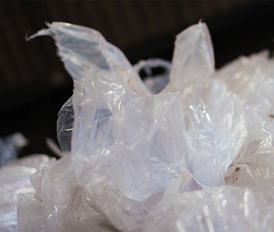
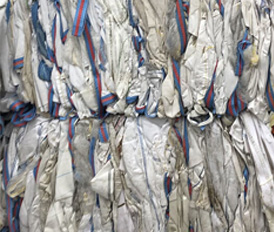
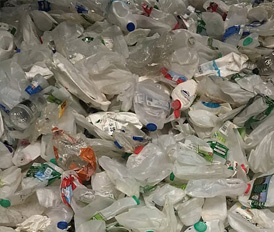
At Pakire Polymers, based in Romania, the work of turning post-consumer plastics into quality raw material is not theoretical. It is daily, technical, and exacting. From dismantled packaging films to recovered automotive parts, materials arrive with histories — sometimes visible, often not — and must be processed with care to meet the standards required by new applications.
This perspective informs a particular view on legislation. Targets are useful, but only if they are precise. Definitions must be clear. Post-consumer waste is not the same as production scrap, and biobased content — though valuable in some contexts — should not be allowed to stand in for recycled material when the aim is circularity.
There is also a quiet confidence that can be drawn from regulation when it is well crafted. It allows those who have invested in quality to thrive, not because they shout the loudest, but because the system recognises the real value they are creating.
Pakire does not seek to position itself as a commentator or a campaigner. But as recyclers, the company sees the world not in abstract policy terms but in tonnes and traceability, in melt flows and contamination rates. In that world, clarity matters, and so does intent. The ELVR, if it can hold its course, has the potential to raise the floor — and with it, the ceiling — of what European recycling can achieve.
The ELVR will not change the world overnight. But it can help realign an industry that has too often treated end-of-life as a logistical inconvenience. Done properly, it will reward transparency, elevate quality, and bring recyclers into the fold as equal participants, not afterthoughts. That would not be a transformation. It would simply be fair.
Share article on your social media
More related articles
Pakire Polymers News
Stay Tuned
Work with Us
If you have a passion for recycling and for achieving a sustainable future, then we want to hear from you.
 English
  Chinese
  German
  Romanian