

Plastic Waste Exports Ban Incoming | What It Means For Eastern European Recyclers
乔治-基尔南
Pakire聚合物 新闻中心
The Plastic Waste Exports Route You’ve Relied On Is Closing
For years, there has been an unspoken understanding across much of Eastern Europe’s recycling sector. The most difficult plastic waste did not need a perfect domestic solution because there was always somewhere else it could go. Mixed LDPE film, contaminated polyolefins, awkward grades that refused to behave like clean recyclables all had an outlet. Plastic waste exports could move east.
That route is now closing.
From May 2026, exporting plastic waste becomes a far more controlled process. Every shipment requires prior notification, detailed documentation and financial guarantees. By November 2026, exports to non-OECD countries effectively stop altogether for at least two and a half years. That timeline is fixed. It does not shift depending on how prepared the market is.
For operators running sorting lines or MBT plants, this is not an abstract policy change. It removes a working part of the system. And when one part disappears, the pressure does not vanish. It moves.
Why LDPE Film Becomes The Problem Everyone Feels
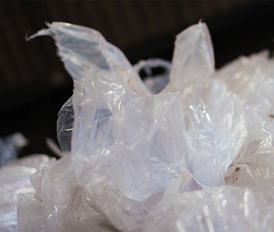
If you walk most sorting facilities in Romania or across CEE, the same material shows up again and again. LDPE film. It arrives in volume, often mixed, often inconsistent, rarely clean enough to command strong value without further work.
The difference now is that this material no longer has a reliable escape route.
Clean, natural LDPE still has a place. That part of the market holds. But mixed film tells a different story. The 80/20 and 90/10 grades that used to move out relatively easily are now the ones that sit longer, move slower and generate more uncertainty.
This is where the issue becomes operational rather than theoretical. It is not about a small niche stream. It is about one of the most common outputs from the system. The material that fills your yard is the same material losing its destination.
And it keeps coming.
Collection volumes across Romania have not dropped off. If anything, the flow remains steady. The system continues to produce exactly the grades that are becoming harder to place. That mismatch is where the pressure builds.
The Old Export Model No Longer Fits The New Rules
There was a time when exporting plastic waste required little more than arranging logistics and agreeing a price. That time has passed.
Now, every shipment sits inside a framework of responsibility. You need to know where the material is going, how it will be processed and whether the receiving facility meets environmental standards. You need to document it. You need to stand behind it.
For operators used to treating export as a release valve, this changes the calculation completely.
The question is no longer “Can I move this material?” It becomes “Can I prove what happens to it after it leaves me?”
That shift matters. It introduces cost, delay and risk into a part of the process that used to be simple. And for lower-value plastics like mixed LDPE, even small increases in friction can make a route unworkable.
Why “Send It West” Isn’t The Answer
At first glance, the solution seems obvious. If material cannot go east, it can go west.
In reality, it is not that straightforward.
Western European recyclers do have capacity, but they are selective. They favour clean, well-sorted material with predictable characteristics. Mixed, contaminated plastics sit outside that preference. They require more work, more cost and more risk.
Even where a buyer exists, the economics tighten quickly. Transporting low-value plastic waste across long distances eats into margins that are already thin. Add administrative complexity and compliance checks, and the route becomes harder to justify.
So the market ends up in an uncomfortable position. More material stays within Europe, but not all of it has a clear destination. The gap between what is produced and what can be easily processed becomes more visible.
The Shift That Is Already Underway
What replaces the plastic waste exports model is not a single new route. It is a different way of thinking about material flow.
Instead of long supply chains, shorter ones.
Instead of distant processing, local handling.
Instead of limited visibility, full traceability.
For operators in Romania and across CEE, that shift points in one direction. Processing needs to happen closer to where the material is generated.
This is not about policy preference. It is about practical reality. Shorter distances reduce cost. Domestic movement avoids plastic waste exports procedures. Compliance becomes simpler because the entire chain sits within the same regulatory environment.
The closer the solution is to the source, the more stable it becomes.
Why Romania Needs Its Own Processing Capacity
Romania produces a significant volume of polyolefin waste. HDPE, LDPE and PP continue to flow through sorting systems at consistent levels, yet the infrastructure to handle lower-quality fractions has not expanded at the same pace.
For years, plastic waste exports routes masked that imbalance. Now that those routes are narrowing, the gap becomes harder to ignore.
Relying on Western Europe introduces cost and distance. Relying on exports introduces regulatory risk. Neither offers a clean, long-term solution for difficult grades.
That leaves domestic processing as the logical next step. Not as a fallback, but as a central part of how the system needs to operate going forward.
Where Pakire Polymers Fits Into This Picture
This is the point where theory meets something practical.
Pakire聚合物 operates in Popești-Leordeni, just outside Bucharest, within reach of the material flows that define the Romanian market. The company processes HDPE, LDPE and PP, covering the core streams coming out of sorting and MBT facilities.
The setup is built for exactly these types of materials. Lindner and EREMA machinery provides the backbone of the operation, while an onsite laboratory ensures that incoming plastics are correctly identified and segregated before processing. That level of control matters when dealing with mixed and inconsistent streams.
Just as important is the compliance side. Pakire is REACH compliant and operates within a fully licensed and certified framework. For operators navigating tighter regulation, that changes the conversation. Material processed domestically within a compliant environment removes a layer of uncertainty that exports can no longer avoid.
The result is not just recycling. It is a clear, documented route from waste to recycled product within the EU.
What Changes On The Ground
For a sorting facility or MBT operator, the shift looks like this.
Instead of building your model around exporting difficult material, you begin to anchor it around local processing. Mixed LDPE that once moved overseas can move within Romania. The journey becomes shorter, the process more controlled.
That brings a different kind of stability. Material moves more consistently. Storage pressure eases. The question of where the waste ends up becomes easier to answer, both commercially and from a compliance perspective.
It does not remove every challenge. Difficult plastics remain difficult. But it removes the dependency on a route that is no longer reliable.
The Risk Of Standing Still
The market does not wait for perfect timing.
As export routes tighten, more material stays within Europe. That increases supply. Prices for lower-grade plastics come under pressure. Buyers become more selective about what they take and when they take it.
Facilities that have not secured alternative outlets feel that pressure first. Material builds up. Margins shrink. Operational flexibility disappears.
This is not a distant scenario. It is already beginning to happen.
A More Grounded Way Forward
The shift away from export dependency does not need to be dramatic. It starts with securing a reliable, compliant outlet within the region.
For operators handling LDPE, HDPE and PP in Romania and across CEE, that means looking at domestic processing not as a secondary option, but as a primary one.
Pakire聚合物 offers that option within Romania. It brings together location, technical capability and compliance in a way that aligns with where the market is heading.
The material stays closer to source. The process becomes clearer. And the uncertainty that once sat at the end of the chain begins to disappear.
That is not a future scenario. It is the direction the industry is already moving in.
分享文章 在您的社交媒体上
工作 与我们合作
如果你对回收利用和实现可持续发展的未来充满热情,那么我们希望听到你的声音。
 Chinese
  English
  German
  Romanian